Netanyahu Proposes Full Gaza Reoccupation: Israeli Media Report
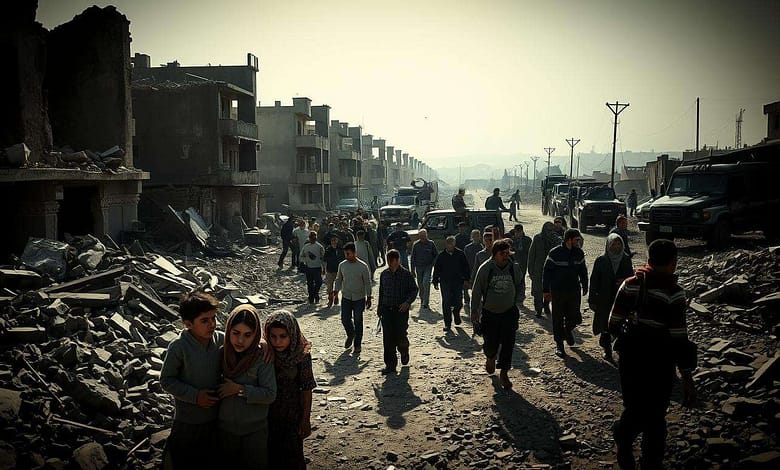
A recent Israeli media report has sparked widespread debate by revealing that Benjamin Netanyahu is considering a plan for the full reoccupation of Gaza. This move has significant implications for the region.

The proposed reoccupation has raised concerns among various stakeholders, with some arguing it could lead to further conflict, while others see it as a necessary measure for regional stability.
Key Takeaways
- The plan, as reported by Israeli media, involves a comprehensive reoccupation.
- Benjamin Netanyahu’s proposal has sparked international attention.
- The implications of this plan are far-reaching, affecting regional dynamics.
- Concerns have been raised regarding the potential for increased conflict.
- The proposal is seen by some as a step towards maintaining stability.
Breaking News: Netanyahu to Propose Full Reoccupation of Gaza, Israeli Media Report
In a dramatic escalation, Israeli media reports suggest that Netanyahu is set to propose the full reoccupation of Gaza, sparking widespread concern. This significant development has the potential to drastically alter the dynamics of the Israeli-Palestinian conflict.
Details of the Media Report
The Israeli media report provides intricate details about Netanyahu’s proposal, suggesting a comprehensive plan that includes both military and administrative components. The proposal is seen as a response to the ongoing tensions and security concerns in the region.
According to the report, the plan involves a significant military presence, aimed at securing key areas and infrastructure within Gaza. This move is expected to be accompanied by measures to establish a new governance structure in the territory.
Sources and Verification of the Proposal
The sources behind the Israeli media report are primarily high-ranking officials within Netanyahu’s government. While the exact details of the proposal are still emerging, the information has been corroborated by multiple sources, lending credibility to the report.
Verification of the proposal is ongoing, with various news outlets and analysts scrutinizing the available information. The international community is also closely monitoring the situation, awaiting official confirmation from the Israeli government.
Initial Reactions to the Announcement
Initial reactions to Netanyahu’s proposal have been mixed, reflecting the complexity of the issue. Supporters of the plan argue that it is necessary for ensuring Israel’s security and stability in the region.
| Reaction | Description |
|---|---|
| Supporters | Argue that the proposal is necessary for Israel’s security and stability. |
| Critics | Express concerns about the potential humanitarian impact and the implications for the peace process. |
| International Community | Is closely monitoring the situation, with various nations expressing cautious concern. |
The proposal has sparked a heated debate, with various stakeholders weighing in on the potential consequences of such a significant move.
Background of the Current Gaza Conflict
Understanding the background of the current Gaza conflict requires examining the historical and ongoing tensions between Israel and Hamas. The Gaza Strip has been a focal point of Israeli-Palestinian tensions for decades, with the situation remaining volatile.
Recent Escalation of Hostilities
The recent escalation of hostilities in Gaza has resulted in significant humanitarian concerns. Violence has surged due to various factors, including political tensions and territorial disputes. The international community has called for restraint, but the situation remains precarious. The conflict has led to casualties on both sides, with civilians often bearing the brunt of the violence.

Hamas-Israel Tensions Leading to This Proposal
Tensions between Hamas and Israel have been a driving force behind the current conflict. Historical grievances and competing claims to the territory have fueled the animosity. The recent proposal by Netanyahu to reoccupy Gaza is seen as a response to these ongoing tensions, aiming to address security concerns.
Current Humanitarian Situation in Gaza
The humanitarian situation in Gaza is dire, with civilians facing significant challenges. The blockade and ongoing conflict have led to shortages of essential supplies, including food, medicine, and clean water. The international community has expressed concern over the deteriorating conditions, calling for humanitarian aid to be allowed into the region.
Historical Context: Israel’s Previous Control of Gaza
To comprehend the implications of Netanyahu’s proposal, it’s essential to examine Israel’s past control over Gaza. The history of Israeli occupation in Gaza is complex and has significant implications for the current conflict.

Israel’s Withdrawal from Gaza in 2005
In 2005, Israel unilaterally withdrew from Gaza, dismantling settlements and relocating thousands of settlers. This move, known as the Disengagement Plan, was intended to improve Israel’s security and reduce tensions with Palestinians. However, the withdrawal did not lead to a significant reduction in violence.
Post-Withdrawal Relationship with Gaza
Following the withdrawal, Israel maintained control over Gaza’s borders, airspace, and coastline. This has led to a complex relationship, with Israel imposing a blockade on Gaza since 2007, citing security concerns. The blockade has severely impacted Gaza’s economy and infrastructure.
Previous Military Operations in Gaza
Since its withdrawal, Israel has conducted several major military operations in Gaza, including Operation Cast Lead in 2008-2009, Operation Pillar of Defense in 2012, and Operation Protective Edge in 2014. These operations have resulted in significant Palestinian casualties and further strained relations.
The historical context of Israel’s control over Gaza provides crucial insights into the current situation and Netanyahu’s proposal for reoccupation. Understanding this background is essential for analyzing the potential implications of such a move.
Details of Netanyahu’s Gaza Reoccupation Plan
Benjamin Netanyahu’s plan for the full reoccupation of Gaza, as reported by Israeli media, has brought the longstanding conflict into sharp focus. The proposal, which has garnered significant attention both domestically and internationally, includes several key components that are crucial to understanding its potential implications.
Military Components of the Proposal
The military aspect of Netanyahu’s plan involves a significant deployment of Israeli Defense Forces (IDF) into Gaza. The proposed military operation aims to neutralize perceived threats from Hamas and other militant groups. Key military components include:
- Enhanced surveillance and intelligence gathering
- Increased troop presence in strategic locations
- Potential for targeted strikes against militant infrastructure

Governance Structure Under Proposed Occupation
The governance structure under Netanyahu’s plan is expected to be complex, involving both military and civilian elements. The proposal suggests establishing a hybrid administration that would oversee the day-to-day operations in Gaza, alongside the military presence. Key aspects of the governance structure include:
| Governance Aspect | Description |
|---|---|
| Military Administration | Oversees security and enforces Israeli military law |
| Civilian Oversight | Manages civilian affairs and basic services |
| Coordination with International Bodies | Facilitates humanitarian aid and diplomatic engagement |
Timeline for Implementation
The timeline for implementing Netanyahu’s Gaza reoccupation plan is expected to be phased, with initial military deployments potentially beginning within weeks. The full implementation, including the establishment of a governance structure, could take several months. Critical milestones include:
- Initial military deployment
- Establishment of civilian administration
- Gradual transfer of responsibilities to local authorities (if applicable)
The success of Netanyahu’s Gaza reoccupation plan will depend on various factors, including international support, the response from Hamas and other militant groups, and the ability to establish a stable governance structure.
Israeli Political Landscape and Internal Reactions
As news of Netanyahu’s Gaza reoccupation plan broke, the Israeli political landscape reacted with a mix of support and criticism. The proposal has sparked a significant debate within Israel, reflecting broader societal and political tensions.

Support Within Netanyahu’s Coalition
Netanyahu’s coalition partners have largely expressed support for the reoccupation plan, viewing it as a necessary measure to ensure Israel’s security. Key coalition members have publicly backed the proposal, emphasizing its potential to stabilize the region.
The support is not uniform, however, with some coalition members raising concerns about the potential humanitarian implications and the need for a clear strategy.
Opposition Voices in Israeli Politics
Opposition parties in Israel have been vocal in their criticism of Netanyahu’s plan, arguing that it could lead to further escalation and destabilization. They have called for alternative solutions that prioritize diplomacy and international cooperation.
Criticism has also come from within the political left, who argue that reoccupation would be a step backward in the peace process and could exacerbate the humanitarian crisis in Gaza.
Public Opinion Among Israeli Citizens
Public opinion among Israeli citizens is divided, reflecting the complexity of the issue. While some view the reoccupation as a necessary security measure, others are concerned about the potential for increased violence and the humanitarian cost.
A recent survey indicated that a significant portion of Israelis are skeptical about the effectiveness of the reoccupation plan, highlighting the need for a clear and comprehensive strategy.
Palestinian Response to the Reoccupation Proposal
In the wake of Netanyahu’s proposal to reoccupy Gaza, Palestinians have expressed strong opposition. The news has sparked widespread concern among Palestinian communities, with many viewing it as a significant threat to their sovereignty and way of life.

Hamas Leadership Statements
Hamas leadership has been vocal in their condemnation of Netanyahu’s plan. They view the proposed reoccupation as an attempt to undermine their control over Gaza and an escalation of the ongoing gaza conflict. Hamas officials have stated that any Israeli attempt to reoccupy Gaza would be met with fierce resistance.
The Hamas leadership has also reached out to international organizations, urging them to condemn the Israeli proposal and to support the Palestinian right to self-determination.
Palestinian Authority’s Position
The Palestinian Authority has also expressed strong opposition to the reoccupation plan, aligning with Hamas in their condemnation. The Authority views Netanyahu’s proposal as a dangerous escalation that could lead to further destabilization in the region.
Officials from the Palestinian Authority have been in contact with international partners, seeking diplomatic support against the proposed gaza reoccupation plan. They emphasize the need for a peaceful resolution to the hamas-israel tensions.
Civilian Perspectives from Gaza
Civilians in Gaza are deeply concerned about the potential consequences of an Israeli reoccupation. Many fear that it would lead to a significant deterioration in their living conditions and a resurgence of violence.
| Concern | Percentage |
|---|---|
| Escalation of Violence | 80% |
| Deterioration of Living Conditions | 75% |
| Loss of Sovereignty | 90% |
The table above illustrates the concerns of civilians in Gaza regarding the potential reoccupation. A significant majority fear an escalation of violence and a deterioration in living conditions, highlighting the humanitarian concerns associated with the proposed gaza occupation.
In conclusion, the Palestinian response to Netanyahu’s reoccupation proposal has been overwhelmingly negative, with both Hamas and the Palestinian Authority strongly opposing the plan. Civilians in Gaza are also deeply concerned about the potential consequences, emphasizing the need for a peaceful resolution to the ongoing conflict.
International Community’s Stance on Netanyahu’s Gaza Strategy
Global powers are weighing in on Netanyahu’s controversial Gaza reoccupation proposal. The international community’s response has been varied, reflecting the complexity of the Israeli-Palestinian conflict.

U.S. Response to the Proposal
The United States, a key ally of Israel, has expressed cautious support for Netanyahu’s proposal. According to a State Department spokesperson, “The U.S. is committed to Israel’s security and is reviewing the proposal in detail.” However, some lawmakers have raised concerns about the potential humanitarian implications.
“We urge all parties to exercise restraint and prioritize the safety and well-being of civilians in Gaza.”
Middle Eastern Nations’ Reactions
Reactions from Middle Eastern nations have been largely critical. Egypt, which has historically played a mediating role in Gaza conflicts, expressed concern about the potential escalation. “Egypt calls for restraint and urges a return to negotiations,” said an Egyptian government official.
Other countries in the region, such as Turkey and Iran, have also condemned the proposal, citing concerns about the impact on regional stability.
Responses from European Union, United Nations, and Other Global Powers
The European Union has called for a peaceful resolution, emphasizing the need for a two-state solution. The United Nations has also expressed concern, with a UN spokesperson stating that any solution must prioritize the protection of civilians and adhere to international law.
Other global powers, including China and France, have echoed these sentiments, highlighting the need for diplomacy and restraint.
The varied international response underscores the complexity of the conflict and the challenges ahead for Netanyahu’s proposal.
Analysis: Potential Implications of Gaza Reoccupation
The proposed reoccupation of Gaza by Israel, as suggested by Netanyahu, has sparked intense debate regarding its potential implications. This analysis will delve into the security implications for Israel, humanitarian concerns for Gaza residents, and the impact on regional stability.
Security Implications for Israel
The reoccupation of Gaza could have significant security implications for Israel. On one hand, it might provide Israel with greater control over security threats emanating from Gaza, potentially reducing hamas-israel tensions.
Military Challenges and Risks
The military operation to reoccupy Gaza would likely face substantial resistance from Hamas and other militant groups, leading to potential military challenges and risks for Israeli forces. Intensive military engagements could result in significant casualties on both sides.
Long-term Security Considerations
In the long term, reoccupation might not necessarily lead to improved security for Israel, as it could foster resentment among the Palestinian population, potentially leading to further conflict.
Humanitarian Concerns for Gaza Residents
The humanitarian situation in Gaza is already dire, and reoccupation could exacerbate the crisis. Access to essential services and the risk of displacement are major concerns.
Access to Essential Services
Gaza residents rely heavily on external aid for basic necessities like food, water, and healthcare. Reoccupation could disrupt these supply chains, further complicating the humanitarian situation.

Displacement Risks
There is a significant risk of displacement among Gaza residents during a reoccupation, potentially leading to a large-scale humanitarian crisis.
Regional Stability Impact
The Netanyahu Gaza proposal could have far-reaching implications for regional stability. Neighboring countries and global powers might be drawn into the conflict, complicating diplomatic efforts to resolve the situation.
The international community’s response will be crucial in determining the outcome of this proposal. The gaza reoccupation plan is likely to face opposition from various quarters, potentially leading to a complex geopolitical scenario.
Conclusion: The Path Forward in the Israeli-Palestinian Conflict
The proposed reoccupation of Gaza by Netanyahu has sparked intense debate, both within Israel and internationally. Understanding the implications of this gaza conflict escalation is crucial for assessing the future of the Israeli-Palestinian conflict.
As Israeli news continues to report on the developments, it’s clear that the gaza occupation plan is a complex issue with far-reaching consequences. The international community’s response will play a significant role in shaping the outcome.
Moving forward, it’s essential to consider the humanitarian concerns and security implications for both Israelis and Palestinians. A peaceful resolution to the conflict will require a nuanced understanding of the historical context and the current situation on the ground.
Netanyahu’s proposal has brought the gaza conflict back into the spotlight, highlighting the need for a comprehensive and sustainable solution. As the situation continues to unfold, staying informed through reliable Israeli news sources will be vital.
FAQ
What is Netanyahu’s proposal regarding Gaza?
Benjamin Netanyahu has proposed a full reoccupation of Gaza, according to an Israeli media report.
What are the details of the Israeli media report on Netanyahu’s proposal?
The report outlines Netanyahu’s plan to reoccupy Gaza, including the military components and governance structure under the proposed occupation.
How has Hamas responded to Netanyahu’s proposal?
Hamas leadership has issued statements in response to the proposal, expressing their opposition to the reoccupation of Gaza.
What is the current humanitarian situation in Gaza?
The humanitarian situation in Gaza remains a concern, with issues related to access to essential services and displacement risks.
How has the international community reacted to Netanyahu’s Gaza strategy?
The international community, including the U.S., Middle Eastern nations, and global powers like the European Union and United Nations, has issued responses to Netanyahu’s proposal, with varying degrees of support and opposition.
What are the potential implications of Gaza reoccupation?
The reoccupation of Gaza could have significant security implications for Israel, humanitarian concerns for Gaza residents, and impact regional stability.
What is the historical context of Israel’s previous control of Gaza?
Israel previously controlled Gaza until its withdrawal in 2005, and has since maintained a complex relationship with the territory, including previous military operations.
What is the proposed timeline for implementing Netanyahu’s Gaza reoccupation plan?
The timeline for implementation is not explicitly stated, but it is expected to be a complex and potentially lengthy process.
How has the Israeli public reacted to Netanyahu’s proposal?
Public opinion among Israeli citizens is divided, with some supporting the proposal and others opposing it.
What are the potential security implications for Israel if it reoccupies Gaza?
The reoccupation could potentially reduce security risks for Israel, but also poses military challenges and long-term security considerations.